How to start Mining Zcash (ZEC)?
Zcash has had a remarkable run. What was trading under $40 (€34) through most of 2024 is now sitting above $555 (€473) today in 2026 May driven by institutional interest, record-level shielded pool adoption, and a growing narrative around financial privacy in a world of increasing blockchain surveillance.
If you’ve been watching from the sidelines and wondering whether it’s time to start mining ZEC or if you’re already mining another coin and considering a switch, this guide walks through everything you need to think about before you power on your first rig.
What Is Zcash, and Why Do People Mine It?
Zcash is a privacy-focused cryptocurrency built on Bitcoin’s codebase but with one critical addition: zero-knowledge proofs (specifically zk-SNARKs) that let users send and receive ZEC without revealing the sender, receiver, or transaction amount. It’s a Proof-of-Work blockchain meaning it requires ZEC miners to secure the network and it uses the Equihash algorithm to do so.
There are a few things that make ZEC stand out for miners in 2026:
1. A fixed supply of 21 million coins
Like Bitcoin, Zcash has a hard cap. The most recent halving occurred in late 2025, reducing the block reward to 1.25 ZEC per block. Scarcity is baked into the design.
2. A stable mining algorithm
The Zcash community voted not to pursue ASIC resistance, which means the Equihash algorithm isn’t going to change overnight and invalidate your hardware. That stability matters when you’re committing capital to specialised equipment.
3. A growing use case
With over 30% of the total ZEC supply now held in shielded addresses a record high, adoption of Zcash’s core privacy feature is accelerating. This isn’t speculative interest alone; people are using the network for its intended purpose.
4. Network developments on the horizon
The Zcash team is actively working on a hybrid Proof-of-Work / Proof-of-Stake consensus model (called Crosslink), quantum-recoverable wallets expected by mid-2026, and a full post-quantum cryptography upgrade targeted for 2027. These signal long-term commitment to the protocol.
What Mining Machine Do You Need?
This is the most important decision you’ll make, so let’s be direct about it.
The Antminer Z15 and Z15 Pro have been sold out for months. A new batch dropped in April 2026, but pricing has moved with demand: expect to pay around €6,000 for a Z15 Pro at the time of writing. That’s a significant step up from earlier production runs. Learn what you can expect of the new Z15 pro release.
GPU Mining: Not Competitive Anymore
Zcash was originally designed to be GPU-friendly, and for years you could mine ZEC with a decent graphics card. That era is over. ASIC miners now dominate the Zcash network to the point where GPU mining is, at best, a learning exercise. You can technically mine ZEC with an RTX 4090, but the output won’t cover your electricity costs in most scenarios. If you’re serious about ZEC mining, you need an ASIC.
ASIC Mining: The Only Viable Path
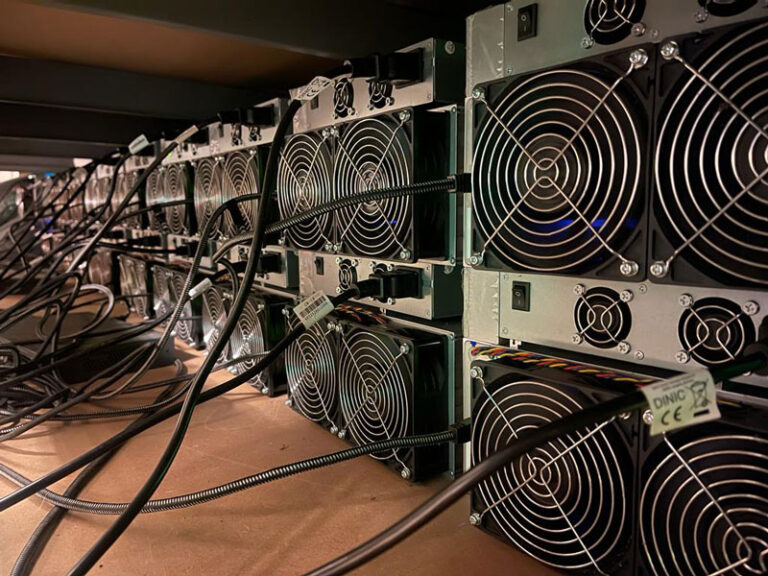
A few things to note about this machine: it’s compact, it’s efficient relative to its output, and it’s loud. At 72+ dB, you’re looking at something roughly as loud as a vacuum cleaner running continuously. That matters a lot when deciding where to put it. We’ll get to that.
What About Older ASICs like Antminer Z15?
The original Antminer Z15 (420 KSol/s) is still around on the secondary market, but at half the hashrate and less efficient power delivery, the margins are significantly tighter. Whether an older unit makes sense depends entirely on your electricity costs. Below $0.05/kWh, it may still work. Above $0.08/kWh, the math gets difficult.
What Else Do You Need to mine Zcash ?
Buying an ASIC is step one. Here’s the full checklist of what you need to actually mine ZEC:
Not all hosting services are equal. Given the Z15 Pro’s specific requirements, 2,780W draw, 200–240V power, need for strong ventilation here’s what actually matters when evaluating providers.
1. A Zcash Wallet
You need somewhere to receive your mined ZEC. Options include:
- Software wallets like Zashi or ZecWallet Lite these support shielded (private) addresses by default and are straightforward to set up
- Hardware wallets like Ledger or Trezor better for larger holdings, though they typically use transparent (public) addresses
- Exchange wallets the simplest option but you don’t control the private keys, which introduces counterparty risk
For most miners, a software wallet for regular operations and a hardware wallet for longer-term storage is a sensible split.
2. A Mining Pool
Solo mining Zcash is technically possible but practically unrealistic for most operators. With the current network difficulty, finding a block on your own would take an unpredictable and potentially very long amount of time. Mining pools combine the hashrate of many miners, find blocks more frequently, and distribute ZEC based on each miner’s contribution.
Zcash pools include Flypool, f2pool, and Slushpool (Braiins). Pool fees typically range from 1–2%. When choosing a pool, look at payout thresholds, server proximity (lower latency means fewer rejected shares), and the pool’s track record for uptime. See our recommendation of mining pools.
3. Mining Software
Your ASIC will come with firmware that handles this, but you’ll need to configure it with your pool’s server address and your wallet address. Most pools provide step-by-step setup instructions specific to the Antminer Z15 Pro. At Hamus hosting we use Foreman mining management for all our clients.
4. Reliable Power Supply
A single Antminer Z15 Pro draws around 2,650–2,780W. That’s a significant load. You need:
- A dedicated electrical circuit capable of handling the draw
- Stable voltage, power fluctuations can damage ASIC hardware or cause downtime
- An understanding of your electricity cost per kWh, because this is the single biggest factor in whether mining is viable for you
5. Adequate Cooling
These machines generate substantial heat. If you’re running even one unit, you need proper ventilation or active cooling. Multiple units in a confined space without adequate airflow will overheat, throttle performance, and shorten hardware lifespan. The manufacturer recommends keeping operating temperatures below 45°C, but experienced operators aim for 70°C or lower on the chips themselves.
We at Hamus Hosting have built our own mining hosting facilities in this blog you can learn all about Asic hosting.
Is ZEC Mining Viable?
Let’s talk about practical economics without the rose-tinted glasses.
Your output depends on a handful of variables: your hashrate, electricity cost, pool fees, network difficulty, and the current ZEC price. These shift constantly, so any specific number is a snapshot, not a guarantee.
As a rough reference point: at current network difficulty and a ZEC price around €423–512, a single Antminer Z15 Pro with electricity at €0.05/kWh can generate meaningful daily output. At €0.10/kWh (a common residential rate), margins shrink considerably. At €0.15/kWh or above, you may be operating at a loss.
Tools you should use before committing:
Plug in your actual hardware specs and your real electricity rate. These calculators give you a much clearer picture.
What the calculators won’t tell you:
- Hardware depreciation: Your ASIC might lose value over time
- Maintenance costs: Fans fail, firmware needs updating, components wear out
- Downtime: No miner runs at 100% uptime indefinitely
- Market volatility: ZEC’s price can move 20–30% in a week
- The upcoming Proof-of-Stake considerations: While Zcash’s hybrid PoW/PoS model (Crosslink) is still in development with no fixed launch date, it’s worth factoring into longer-term planning
Here’s are the calculated cost and fees at most hosting datacenters.
Mining is not for everyone
And we’d rather say that upfront than after. The costs for hardware, electricity, maintenance are high and there’s no guarantee that what comes out will exceed what goes in. Market prices move, network difficulty adjusts, and things break.
Only use funds you’re genuinely comfortable losing.
There’s also a learning curve that catches people off guard. Setting up and maintaining a mining operation takes hands-on technical knowledge. If you’re brand new to this, we’d strongly encourage you to spend real time learning before you commit.
If your goal is simply to hold ZEC, buying it on an exchange is far simpler than mining it. Mining makes sense when you want to be part of the network’s infrastructure, not just acquire the coin. But if mining is the path you want to take, we’re here to support you with the hosting and hardware side of things.
Please don’t hesitate to contact us if you have any questions or feel free to book a call with Christiaan.

Book a call with Christiaan
We’re here to help! Schedule a 30 minutes call at your convenience.
Why Consider Hosting Your Miners at a Professional Setup?
Here’s where most first-time miners hit a wall. You’ve done the research, you understand the hardware, you’ve run the numbers and then you realise you need to actually put this thing somewhere.
An Antminer Z15 Pro running in your spare bedroom presents several problems:
Noise. 72+ dB, 24/7. That’s not compatible with residential living for most people.
Heat. Nearly 2,800W of continuous power consumption means nearly 2,800W of heat output. In a small room, temperatures climb fast.
Power. Most residential circuits aren’t designed for this kind of sustained load. Running a single ASIC may be manageable; scaling to multiple units usually requires electrical upgrades.
Electricity cost. Residential electricity rates in most countries run between $0.10–0.30/kWh. At those rates, mining margins are thin to non-existent.
Reliability. Internet outages, power fluctuations, and cooling failures at home mean downtime and downtime means your miner isn’t producing anything while still depreciating.
This is exactly why mining hosting exists.
What Mining Hosting Companies Solves
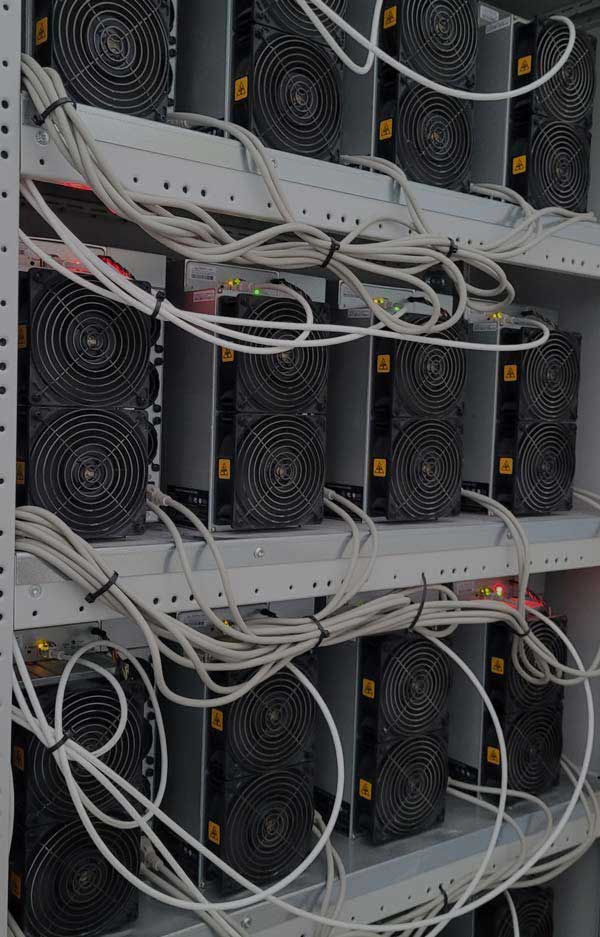
Mining hosting, sometimes called colocation, means your miner runs in a purpose-built facility instead of your home or office. A hosting provider takes care of the infrastructure: power, cooling, network connectivity, physical security, and monitoring.
Here’s what that looks like in practice:
-
Lower electricity costs.
Hosting facilities negotiate industrial power rates that are typically a fraction of what you'd pay at home. Rates of $0.05–0.07/kWh are common in well-located facilities and that difference alone can be the deciding factor between viable and unviable operation.
-
Purpose-built environment.
Professional data centre cooling, redundant power supply, fire suppression, and physical security. Your hardware operates in conditions designed for it, not adapted from a garage.
-
Uptime.
Hosting providers monitor equipment and can respond to issues quickly often before you'd even notice a problem from home. Firmware updates, reboots, and basic troubleshooting are handled on-site.
-
Scalability.
Want to add more units? Hosting facilities are built to accommodate growth. You don't need to rewire your house or install industrial ventilation.
-
You keep ownership.
This is important to understand: with hosting, the miner is yours. You own the hardware, you choose which pool to mine with, and the ZEC goes to your wallet. The hosting provider is supplying the infrastructure, not managing your operation or taking a cut of your output.
How Hamus Hosting Approaches Mining Hosting
At Hamus Hosting, we offer hosting services for client-owned mining hardware, including Equihash ASIC miners like the Antminer Z15 Pro.
Here’s what our hosting includes:
- Rack space in a monitored, climate-controlled facility
- Power supply at competitive industrial rates
- Network connectivity with low-latency connections to major mining pools
- Basic operational monitoring: we keep an eye on your hardware and flag issues
- Equipment intake assessment: we inspect and document your hardware on arrival, including make, model, serial number, and condition
A few things we want to be upfront about:
Mining output is variable. It depends on network difficulty, ZEC market conditions, pool performance, and other factors outside anyone’s control. We don’t make performance promises.
You retain full ownership of your equipment and the ZEC it generates. We’re an infrastructure provider, not a fund manager.
Hosting fees are a straightforward service cost, payable in advance on the schedule set out in your agreement.
A Quick Checklist Before You Start
Run the numbers.
Use a mining calculator with your actual electricity costs. If you're planning to host, use the hosting provider's rate instead of your home rate. Be conservative.
Secure your wallet.
Set up a Zcash wallet before you do anything else. Test it by receiving a small transaction. Make sure you understand the difference between shielded and transparent addresses.
Choose your hardware.
The Antminer Z15 Pro is the standard for Equihash mining in 2026. Consider whether to buy new or second-hand based on your budget and risk tolerance.
Decide where to run it.
Home operation is feasible for a single unit if you have cheap power, a suitable space, and tolerance for noise. For anything beyond that or if your residential electricity rate makes home mining uneconomical, hosting is worth serious consideration.
Select a mining pool.
Research pool fees, payout structures, and server locations. Most miners start with NiceHash or f2pool for Zcash.
Configure and monitor.
Set up your miner with your pool credentials and wallet address. Then watch it, check hashrate, temperature, and uptime regularly, especially in the first few weeks.
Keep in Mind
Zcash mining, like all cryptocurrency mining, involves real costs and genuine uncertainty. Hardware costs money. Electricity costs money. Network difficulty adjusts. Market prices fluctuate. Protocol upgrades, including the potential shift to hybrid PoW/PoS consensus could change the mining landscape in the coming years.
None of this makes mining a bad idea. It means it deserves the same careful thinking you’d apply to any operational commitment. Do the homework, run the numbers with realistic assumptions, and build in a margin for the unexpected.
Ready to Explore Hosting for Your ZEC Miner?
If you’re looking at Zcash mining and want to understand how hosting could work for your setup, we’re happy to walk you through it with no pressure, no jargon, just a practical conversation about what fits your situation.
Whether you already have ASIC miners or you’re still deciding what to buy, our team can help you think through the infrastructure side so you can focus on the mining itself.
Start mining today!
We’ve simplified the process to make mining crypto easier than ever. Fill in your details in the form and we will contact you shortly!