Pinecone IniBox Pro Mining: Still Worth the Investment?
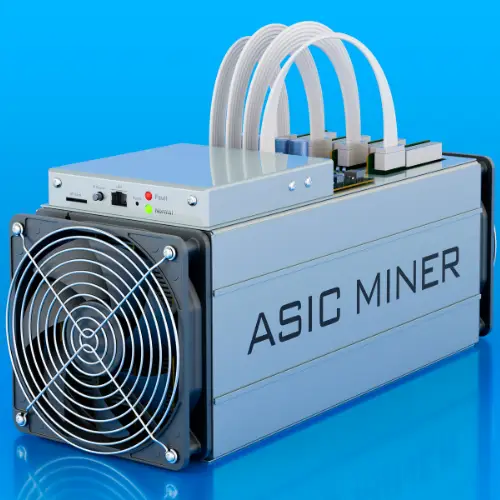
The Pinecone Matches IniBox Pro is one of the most discussed ASIC miners in the altcoin space right now. Built for the controversy VersaHash algorithm, it delivers 2.4 GH/s at a power draw of just 1,280W. With a purchase price of approximately €7,000 at today’s market, these specifications position it as a low-energy, high-return alternative to traditional Bitcoin mining hardware.
At Hamus Hosting, we have experience running these machines at our facilities in Norway for our clients. In this article we break down the pros and cons of mining with the IniBox Pro. And what we have experienced hosting these miners. Independent sources reported it might be a possible fraud. If you already own these miners learn how to move next. And with a €15.38/day on a €0.059 kWh rate on asicminervalue.com is it still worth it? Let’s dive into it.
What Does the IniBox Pro Mine?
The IniBox Pro runs the VersaHash algorithm, which is purpose-built for mining InitVerse (INI) and INIChain. These are the primary and currently the only, coins that use this algorithm. Unlike SHA-256 miners (Bitcoin) or Scrypt miners (Litecoin) that can be pointed at multiple coins sharing the same algorithm, VersaHash hardware is tied to the InitVerse ecosystem.
I
nitVerse positions itself as a decentralised cloud computing platform, with INI as its native token. The coin launched in mid-2025 and trades on a limited number of exchanges. As of mid-2026, INI has a circulating supply of approximately 546 million tokens and a market capitalization that has fluctuated between roughly €5 million and €30 million depending on price movements.
This is an important detail for anyone considering the investment. When you purchase a VersaHash miner, you are committing to a single coin ecosystem.
If INI underperforms or the project loses momentum, there is no alternative coin to switch to with the same hardware. That makes the IniBox Pro fundamentally different from Bitcoin ASIC, where the underlying network has decades of track record and deep liquidity.
The investment you need to start mining VersaHash
The €7,000 machine price is only the beginning of the costs. Before an IniBox Pro generates its first euro in revenue, a miner needs to account for the full chain of costs involved in getting operational.
First, there is the hardware acquisition itself. On top of the purchase price, shipping costs and customs clearance fees apply, particularly for miners importing into the EU or Norway. Depending on the origin and destination, these additional costs can add several hundred euros to the total.
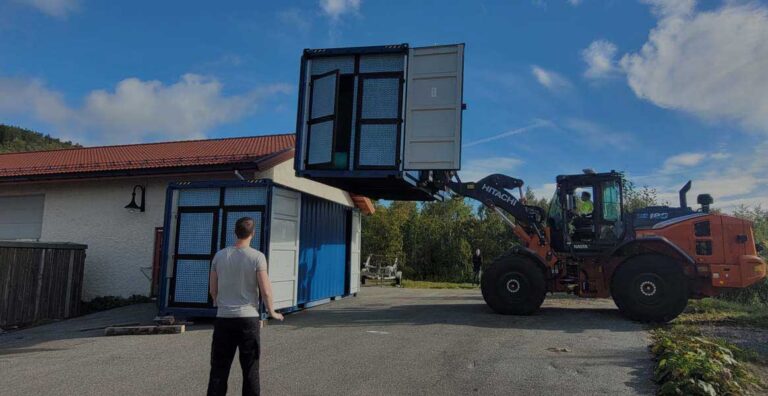
Then comes the hosting setup. At a professional facility, the machine needs to be received, inspected, racked, cabled, and connected to both power and network infrastructure. Hosting providers charge facility fees and electricity costs, which are ongoing monthly expenses for the lifetime of the contract. At Hamus Hosting, our electricity rates are competitive, but they are still a recurring cost that directly affects net profitability.
Finally, there is the aftercare. ASIC miners are not plug-and-forget devices.
The IniBox Pro, like any mining hardware, requires regular monitoring, occasional servicing, and what we would describe as extra attention. Fans need cleaning or replacement, firmware may need updating, and environmental conditions must be maintained within operating range. All of this is part of the total cost of ownership that miners should factor into their ROI calculations before purchasing.
When you add up the machine, shipping, customs, installation, hosting fees, electricity, and ongoing maintenance, the real investment is considerably higher than the headline price of the miner alone.
2 important factors to consider before Mining VersaHash
If you are considering purchasing a Pinecone IniBox Pro or any other VersaHash miner, please be aware of two things before you commit:
1. You are locked into a single mining pool.
Unlike Bitcoin or Litecoin mining, where you can freely switch between dozens of independent pools to compare performance and payouts, VersaHash mining currently offers no alternative. You mine through YatesPool, or you don’t mine at all. There is no way to independently verify whether your payouts are fair by comparing them against another pool’s performance.
2. Check your payouts carefully and consistently.
We strongly recommend tracking your daily payouts against your expected hashrate from day one. Compare what you actually receive to what profitability calculators project for your hardware. If the numbers don’t add up, there is currently no alternative pool to switch to your only option is to continue mining at those rates or shut down the machine.
This is not a situation most miners are used to. In established ecosystems like Bitcoin, pool competition keeps operators honest miners vote with their hashrate. With VersaHash, that market mechanism does not exist.
We are not telling anyone what to do with their money. But we believe every miner should understand these limitations clearly before purchasing hardware that costs €7,000+ and can only mine a single coin through a single pool.
Advantage of the Pinecone IniBox Pro: Low Power Consumption
Where the IniBox Pro does deliver on its promise is energy efficiency. At 1,280W, it draws roughly a third of what a standard Bitcoin ASIC requires. Profitability calculators currently estimate daily returns between approximately €37–€60 depending on electricity costs, with ROI projections ranging from 120 to 200 days significantly shorter than most Bitcoin miners, which typically require 1,000+ days to break even.
For hosting operations, the low power draw means reduced load on electrical infrastructure, lower cooling requirements, and a smaller physical footprint. The machine weighs approximately 10.7 kg and fits standard rack configurations without difficulty.
From a pure hardware and energy perspective, this is a well-designed miner. But the machine itself is not an issue.
Sources Suggest Possible Fraud: The payout doesn’t add up
We’re not the only ones raising questions. K1Pool, an independent mining pool operator, attempted to support InitVerse mining on their platform and shut it down after discovering what they publicly called a scam. Their findings were stark: blocks submitted by non-whitelisted wallet addresses were being rejected by the network entirely, while a small group of whitelisted wallets were mining at roughly 500 times lower difficulty than everyone else. In other words, the network was designed so that only approved addresses could effectively mine the opposite of what a decentralised proof-of-work blockchain is supposed to be.
Vipor.NET, another pool operator, published a detailed technical audit after analysing the InitVerse node source code, on-chain data, and miner binaries. Their findings went further: the so-called “VersaHash” algorithm is cryptographically identical to NexaPoW, a known existing algorithm that was simply renamed. They also documented evidence that YatesPool was actively redirecting miners’ pending balances back to pool-controlled wallet addresses, and that the InitVerse team and YatesPool appear to be the same entity. When Vipor.NET and other community members raised these issues in the InitVerse Discord, they were banned.
WhatToMine, one of the most widely used profitability calculators in the mining industry, has since added a warning to their InitVerse page advising miners of suspicious chain and pool activity and recommending they do their own research before committing. ScamAdviser has also flagged YatesPool’s domain.
When this many independent sources, pool operators, technical auditors, profitability trackers, and community reviewers all arrive at the same conclusions separately, it paints a picture that is difficult to dismiss. We advise you to independently investigate and do your own research before committing to any investments of Pinecone IniBox Mining.
Independent pool operators, technical auditors, and the broader mining community have been investigating InitVerse — and their findings explain exactly why the payouts don’t add up.
The algorithm is not original
Vipor.NET, an independent pool operator, published a comprehensive technical audit after analysing the InitVerse node source code, on-chain data, and miner binaries. Their conclusion: the so-called “VersaHash” algorithm is cryptographically identical to NexaPoW — a known existing algorithm used by the Nexa blockchain. InitVerse took someone else’s algorithm, renamed it, and called it their own.
Independent researchers proved this by building Nexa2InitVerse, an adapter that connects an IniBox to a standard NexaPoW miner. The adapter works — proving the algorithms are the same. The IniBox itself is very likely a modified Dragonball Nexa ASIC, rebranded and locked to YatesPool.
The pool blocks everyone except their own hardware
YatesPool uses a custom handshake protocol to control who can mine. When a miner connects, the pool sends a specific “Ping” that only the IniBox ASIC can decode. If the miner fails to respond with the correct “Pong,” it gets disconnected immediately. This means anyone trying to mine with standard GPU software or alternative ASIC hardware is blocked by design — even though the underlying algorithm is identical to NexaPoW and those miners would work perfectly on any legitimate NexaPoW pool.
Reports from researchers state that InitVerse’s official GPU mining software runs at roughly one-twentieth of normal speed, and GPU hashrate is capped at 10 MH/s on the pool dashboard unless you use an IniBox. As of March 2, 2026, Vipor.NET attempted to connect with both a GPU and CPU following InitVerse’s own mining guide and could not connect at all — even using the exact commands provided. GPU and CPU mining appears to have been completely disabled.
They control who can produce blocks
The InitVerse network maintains a whitelist of wallet addresses that are allowed to produce blocks. As K1Pool reported, blocks submitted by non-whitelisted wallets are rejected entirely. Even if a miner finds a valid block, they cannot add it to the chain unless their address is on the approved list.
This is not how proof-of-work is supposed to function. In Bitcoin, anyone with a miner can participate and any valid block gets accepted by the network. InitVerse has built a permissioned system disguised as proof-of-work.
Learn all about it here:
- Rabid Mining — “BREAKING: Is INI A Major Crypto ASIC Scam?” (YouTube) — December 2025
- Rabid Mining — “Did I Just Plug In a SCAM Miner?” (YouTube) — December 2025
- Red Panda Mining — “INI Box Profitability EXPOSED” (YouTube) — December 2025
- Brandon Coin — “Confirmed SCAM Matches ini Box Pro” (YouTube) — December 2025
- Red Panda Mining – NITVERSE DROPS 50%… Mining INI is done for – May 2026
What Hosting Providers Control and What They Do Not
A recurring point of confusion among IniBox Pro clients is the distinction between hosting performance and pool performance. As a hosting provider, our responsibility is to receive the miner, install it, supply stable power and cooling, monitor it around the clock, and service it when something needs attention. That is the scope of hosting.
What we cannot influence is the mining pool. Payout calculations, pool software, network difficulty, and blockchain mechanics all operate independently of the hosting facility. When a client contacts us about lower-than-expected earnings, our first step is always to verify the hardware. If the machine is hashing correctly and the infrastructure is performing as expected, the issue is upstream and that is beyond what any hosting provider can resolve.
In practice, IniBox Pro miners generate a notably higher volume of support enquiries compared to Bitcoin ASICs. The machines themselves are somewhat reliable, but the uncertainties in the surrounding ecosystem, pool performance, payout discrepancies, coin price fluctuations. Resulting in more frequent client communication and more time spent on troubleshooting that ultimately points back to factors outside the hosting environment.
INI Coin Volatility Adds Another Layer of Risk
InitVerse (INI) has demonstrated significant price instability since it entered the market. The coin has traded as low as approximately €0.02 and reached highs above €0.12, with more recent prices fluctuating in the €0.01–€0.05 range. These movements can occur rapidly, substantial drops within a single day are not uncommon.
This volatility compounds the pool payout issue. Even when payouts arrive as expected, the value of those payouts can change dramatically before a miner has the opportunity to convert to fiat currency. With relatively thin trading volume and limited liquidity, sell pressure from miners cashing out can itself push the price down further. As of today 29 May 2026 the profitability has dropped to €15.38/ day on a €0.059 kWh rate, on asicminervalue.com.
If You Already Own a Pinecone IniBox Pro: Here’s our best tips
If you’ve already purchased an IniBox Pro and it’s currently mining, or sitting in a box waiting to be deployed, you’re probably reading this article with a sinking feeling. We understand and we want to be straightforward about your options rather than leave you guessing.
If your miner is currently hosted and producing payouts:
Track your actual earnings carefully against what the profitability calculators project for your hashrate. Log everything — daily payouts, pool dashboard figures, what actually arrives in your wallet. If the numbers add up and you’re comfortable with the INI ecosystem after reading everything above, that’s your decision to make. But if the payouts consistently fall short and you can’t verify why — because there’s no second pool to compare against — you now have a better understanding of where the problem likely sits.
If you’re considering cutting your losses:
We’ve seen clients reach this point, and there’s no shame in it. A miner that works perfectly but mines into a system you no longer trust is not a functioning investment — it’s a running cost. Continuing to pay electricity and hosting fees on a machine producing questionable returns doesn’t become a better decision just because you’ve already spent money on the hardware. Sometimes the smartest move is to stop adding costs to a position that isn’t working.
Can you repurpose the hardware?
This is the difficult part. The IniBox Pro is very likely a modified Dragonball Nexa ASIC, locked to the VersaHash algorithm and to YatesPool specifically. Unlike a Bitcoin ASIC that you could point at any SHA-256 pool, or a GPU that you could redirect to dozens of different algorithms, the IniBox Pro was designed to mine one coin through one pool. If that ecosystem doesn’t deliver, the hardware has extremely limited alternative use. Some community members have experimented with the Nexa2InitVerse adapter to mine Nexa (NEXA) using the underlying NexaPoW algorithm, but this is an unofficial workaround — not a supported configuration — and Nexa itself is a small-cap coin with its own risk profile.
Can you sell the hardware?
You can try. Secondhand IniBox Pro units are being listed on various marketplaces, but as awareness of the issues described in this article grows, demand is likely to decrease. If you’re considering selling, sooner is probably better than later — and be transparent with any buyer about the limitations. The mining community is small, and reputation matters.
This article has partly been written with the assistance of Claude AI and has been proofread and verified by the Hamus Hosting team.

Book a call with Christiaan
We’re here to help! Schedule a 30 minutes call at your convenience.
Start mining today!
We’ve simplified the process to make mining crypto easier than ever. Fill in your details in the form and we will contact you shortly!