The Complete Guide to Privacy Coins
What They Are, How They Work, and Where They Actually Get Used
Bitcoin gave the world a public ledger. Every transaction, every wallet balance, every counterparty relationship sitting in plain view forever. That was the trade-off, and for many use cases it is fine.
For a lot of others, it is not.
Privacy coins exist because financial privacy is not a criminal preference. It is a basic property of money that people have had for most of human history, and transparent digital payments are quietly eroding it. Governments, corporations, and analytics firms can trace where your money comes from, where it goes, and build a behavioural profile from it. If that concerns you, you are not paranoid. You are paying attention.
This post covers every major privacy coin, the technology behind each one, and what people are actually using them for. No hype, no price predictions.
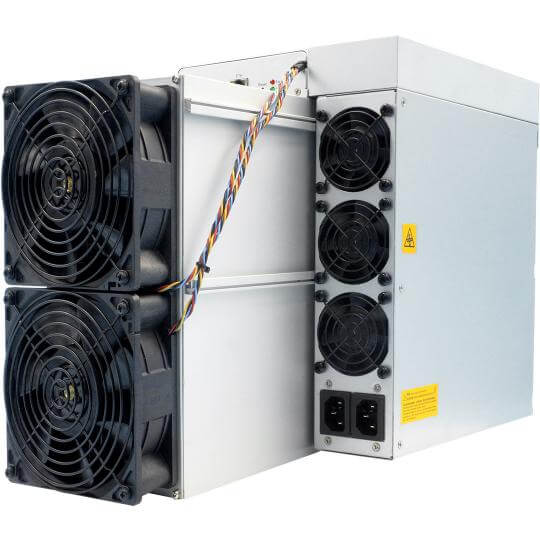
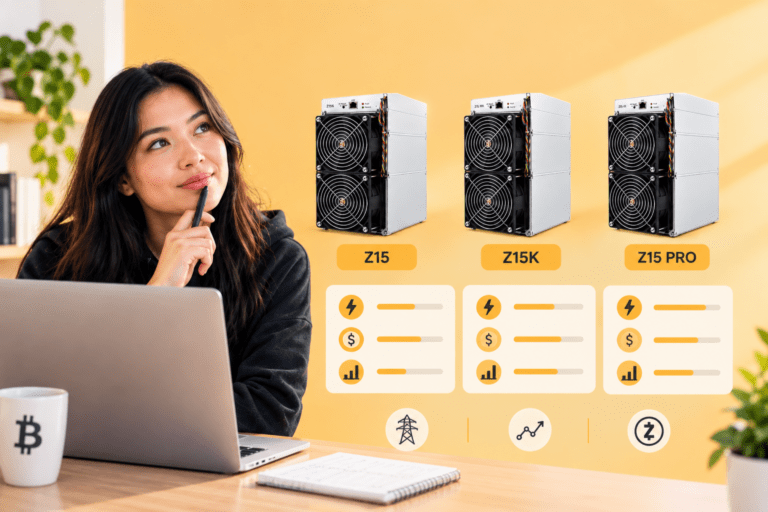
If you are already running an Antminer Z15 Pro or evaluating privacy coin mining, the hardware and hosting section at the bottom is written for you. If you are trying to understand the landscape first, start here.
How Privacy Coins The Five Core Technologies work?
Before covering specific coins, it helps to understand the approaches to on-chain privacy. Most privacy coins use one or a combination of these.
- Ring Signatures. Used by Monero. When you send a transaction, the network bundles your input with a set of decoy inputs from other transactions. An observer sees a group of possible senders, not the actual one. Monero combines this with stealth addresses, which generate a one-time destination address per transaction, and RingCT (Ring Confidential Transactions), which hides the amounts transferred. Sender, receiver, and amount are all obscured by default on every transaction, without any action required from the user.
- Zero-Knowledge Proofs (zk-SNARKs). Used by Zcash, Firo, and Pirate Chain. A zero-knowledge proof allows one party to prove a statement is true without revealing any underlying information. In blockchain terms: the network confirms your transaction is valid without knowing who you are, who you are paying, or how much is moving. Cryptographically stronger than ring signatures in theory, though real-world privacy depends heavily on how many people use the shielded layer.
- MimbleWimble. Used by Grin and Beam. Transaction inputs and outputs are combined and aggregated across the blockchain so that tracing individual payment flows becomes extremely difficult. There are no addresses in the traditional sense, and the blockchain stays compact because spent outputs are pruned. Strong privacy, thinner ecosystem.
- CoinJoin. Used by Dash (PrivateSend). Multiple users combine transactions into a single one, breaking the direct link between inputs and outputs. A simpler mixing technique and correspondingly weaker than the above, but accessible and widely understood.
- Trusted Execution Environments (TEEs). Used by Secret Network and Oasis Network. Rather than hiding data through cryptographic techniques at the transaction layer, these platforms run computations inside hardware-level secure enclaves. Even the nodes processing the transaction cannot see the data being computed. This extends privacy from payments into the domain of private smart contracts and confidential applications.
The Privacy Coins: One by One
Monero (XMR)
Privacy model: Mandatory. Protocol-level. Always on.
Monero is the benchmark. Running since 2014, the privacy is not optional, and every transaction automatically contributes to the anonymity pool for every other user. The Monero Research Lab continues to publish innovations. Its developer community is one of the most active in open-source crypto.
The US Internal Revenue Service offered a $625,000 bounty to anyone who could reliably crack Monero’s privacy. That is a government agency signalling how seriously they take the problem, not a marketing claim.
The upcoming FCMP++ upgrade (Full Chain Membership Proofs) is expected to further strengthen privacy guarantees by expanding the anonymity set well beyond the current ring signature approach.
The downside is regulatory pressure. In January 2024, Binance removed Monero for users in the European Economic Area. OKX followed. Monero has no disclosure mechanism, which makes it incompatible with compliance frameworks that require an audit path.
What it gets used for: Private peer-to-peer payments, international remittances in high-surveillance regions, donations to activists and NGOs where donor privacy matters, confidential contractor payments, and as a privacy routing layer where users swap BTC to XMR to pay and back again.
Algorithm: RandomX. CPU-optimised, intentionally ASIC-resistant. Consumer CPUs remain competitive.
External reference: Monero official site
Zcash (ZEC)
Privacy model: Optional. Transparent or shielded, user chooses.
Zcash was one of the first blockchains to implement zk-SNARKs in production. The cryptographic work coming out of its development contributed foundational research to zero-knowledge proofs across the entire blockchain industry.
As of late 2025, shielded adoption has surged with over 30% of transactions now using the privacy layer and 4.9 million ZEC held in shielded wallets. That growth matters: the larger the shielded anonymity set, the stronger the privacy guarantee for every user inside it.
Where Zcash wins over Monero is compliance compatibility. The viewing key mechanism lets users prove transaction details to auditors or regulators without making everything public. The SEC held a Zcash roundtable in 2025, the kind of regulatory engagement Monero does not receive. As of mid-2026, Zcash remains listed on Coinbase and Robinhood, where Monero has been removed.
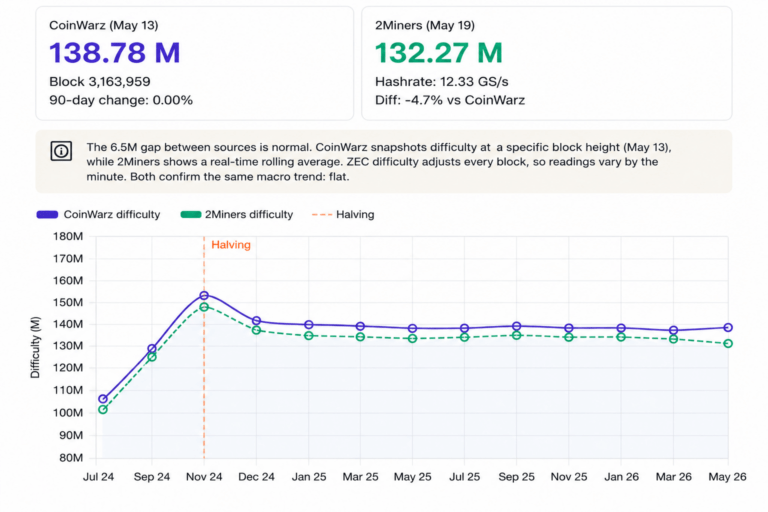
For Zcash mining specifically, the November 2024 halving reduced block rewards to 1.5625 ZEC per block. The next halving is not until late 2028. If you are running an Antminer Z15 Pro, our post on how to start mining ZEC walks through the setup.
What it gets used for: Cross-border business payments requiring selective auditability, institutional treasury exposure to privacy technology, enterprise settlements, and confidential DeFi via the UXLINK partnership.
Algorithm: Equihash. ASIC-mineable. Z15 Pro-class hardware required for competitive mining.
External reference: Zcash official site | Electric Coin Company | Zcash Foundation
Monero vs Zcash: The Difference
This comparison comes up constantly, so let us be direct.
Monero’s privacy operates at the protocol level. Every transaction is private. Every user contributes to the anonymity pool automatically. You cannot accidentally expose yourself by making the wrong choice.
Zcash’s shielded pool is only as strong as the number of users who choose to use it. If most ZEC transactions stay transparent, the shielded anonymity set is weaker than Monero’s default pool, even if the underlying cryptography is mathematically stronger.
For maximum consistent privacy: Monero. For optional disclosure with institutional compatibility: Zcash. These are genuinely different use cases and both are legitimate.
Dash (DASH)
Privacy model: Optional, bolt-on. CoinJoin-based mixing via PrivateSend.
Dash is more accurately described as a payments coin with an optional privacy feature than a genuine privacy coin. It launched in 2014 as fast, user-friendly digital cash. PrivateSend was added as an optional layer using CoinJoin mixing, which requires users to opt in and repeat mixing rounds. Chain analysis firms can work with PrivateSend outputs in ways they cannot with Monero or shielded ZEC.
Its partnership with Alchemy Pay in late 2025 extended fiat access to 173 countries through 300 payment channels, which reinforces where Dash’s real identity sits: payments first, privacy second.
What it gets used for: Fast low-fee payments, merchant transactions, remittances where speed and cost matter more than strong anonymity guarantees.
Algorithm: X11. ASIC-mineable.
External reference: Dash official site
Grin (GRIN)
Privacy model: Default. MimbleWimble protocol.
Grin is a minimalist project. No company behind it, no founder allocation, no premine, no supply cap. Linear emission by design, which keeps Grin functioning as a medium of exchange rather than encouraging hoarding. Pure MimbleWimble: no addresses in the traditional sense, amounts hidden by default, blockchain stays small through output pruning.
Transaction inputs and outputs are aggregated across the chain in a way that makes individual payment tracing extremely difficult. The trade-off is a thinner ecosystem and less familiar tooling compared to Monero or Zcash.
What it gets used for: Privacy-conscious value transfer for users who want a lean, community-driven protocol with no corporate involvement.
Algorithm: Cuckatoo32. GPU-mineable, somewhat ASIC-resistant.
External reference: Grin official site
Beam (BEAM)
Privacy model: Default. MimbleWimble with opt-in auditability.
Beam uses the same MimbleWimble foundation as Grin but adds optional auditability for compliance scenarios and a more developed user interface. A company structure backs it, which gives it a different development model from Grin’s fully community-driven approach.
Beam has expanded into confidential DeFi and confidential asset issuance on top of the base privacy layer. If you want MimbleWimble privacy with the ability to run auditable transactions when required, Beam is the more practical option of the two.
What it gets used for: Private asset transfers, confidential financial applications, and institutional users who need MimbleWimble privacy with selective disclosure capability.
Algorithm: BeamHash III. GPU-mineable, with ASIC hardware available.
External reference: Beam official site
Firo (FIRO)
Privacy model: Default anonymisation using Lelantus Spark.
Firo has been iterating on privacy coin technology since 2016, launching as Zcoin with a Zerocoin protocol and evolving through multiple upgrades to its current Lelantus Spark mechanism.
With Lelantus Spark, users burn an arbitrary amount of FIRO and later redeem it in parts to new addresses, with amounts hidden and no connection traceable between the burn and the redemption. Firo also uses Dandelion++ routing for network-level privacy, which obscures the originating IP address of transactions by spreading them through randomised paths.
The burn-and-redeem approach produces strong unlinkability without relying on ring signatures or zk-SNARKs, making it a technically distinct third option worth understanding on its own terms.
What it gets used for: Privacy-focused payments, anonymous treasury management, users who want a cryptographic approach distinct from both Monero and Zcash.
Algorithm: FiroPoW. GPU-optimised and ASIC-resistant.
External reference: Firo official site
Pirate Chain (ARRR)
Privacy model: Fully shielded by default. No transparent transactions at all.
Pirate Chain takes zk-SNARKs in the same direction Monero takes ring signatures: mandatory, no opt-out. Every transaction on the network is private. There is no transparent address tier, which means every transaction contributes to the shielded anonymity set. The result is the largest anonymity set of any zk-SNARK-based coin.
The trade-off is zero regulatory compatibility and limited exchange access. If your priority is maximum cryptographic privacy and you accept the liquidity constraints, Pirate Chain makes a coherent case.
Pirate Chain uses Equihash and supports merge-mining, meaning you can mine it alongside other Equihash coins like Zcash or Horizen without additional hardware cost. If you are already hosting an Equihash ASIC, merge-mining ARRR costs you nothing extra.
What it gets used for: Maximum-privacy value transfer where absolute anonymity takes priority over exchange liquidity.
Algorithm: Equihash. Merge-minable with Zcash and Horizen.
External reference: Pirate Chain official site
Secret Network (SCRT)
Privacy model: Programmable privacy for smart contracts and decentralised applications.
Secret Network is not a payment-focused privacy coin. It is a Layer 1 blockchain designed to bring privacy to computation, not just transactions.
Secret Contracts have real-world use cases including user-side encrypted data storage, NFTs with private content and ownership, lending protocols with private collateralisation data, and any application requiring true on-chain randomness. The computation runs inside Trusted Execution Environments where even the validators processing transactions cannot see the underlying data.
Secret Network is also building confidential AI infrastructure: running large language model inference inside TEEs so that model inputs and outputs remain private to the user. That is a technically interesting direction that extends well beyond the usual privacy coin narrative.
All users on Secret are also protected from MEV (Miner Extractable Value) attacks by default, because the encrypted mempool makes front-running impossible.
What it gets used for: Private DeFi (lending and trading without position exposure), private NFTs, encrypted data storage, confidential AI inference, MEV-resistant decentralised applications.
Consensus: Proof-of-stake. Not mined.
External reference: Secret Network official site | Secret Network docs
Oasis Network (ROSE)
Privacy model: Confidential computing for smart contracts via hardware-level TEEs.
Oasis takes a similar approach to Secret Network but with a different architecture built around ParaTimes, which are independent execution environments running alongside the main consensus layer. The Sapphire ParaTime is specifically designed for Ethereum-compatible confidential smart contracts.
The focus is enterprise and institutional use cases: confidential data sharing, private AI model training, healthcare data on-chain, and financial applications that need computation to be verifiable without being visible. ParaTimes reach high transaction throughput, making Oasis practical for applications where Secret Network’s throughput may be a constraint.
What it gets used for: Confidential DeFi, private data marketplaces, enterprise data processing, AI model training with privacy guarantees, and tokenised real-world assets where transaction details need to remain confidential.
Consensus: Proof-of-stake. Not mined.
External reference: Oasis Network official site
Horizen (ZEN)
Privacy model: Hybrid. Private transactions on the mainchain plus a modular sidechain ecosystem.
Horizen’s main differentiator is the Zendoo sidechain protocol, which allows independent blockchains to connect to the Horizen mainchain and inherit its security while implementing their own rules. This makes it a privacy infrastructure platform as much as a coin, built on zero-knowledge proof technology.
Unlike classic privacy coins that focus solely on shielding transactions, Horizen supports both private payments and a broader ecosystem of customisable sidechains for DeFi, enterprise solutions, and custom blockchain deployments. Horizen uses Equihash and is merge-minable alongside Zcash and Pirate Chain, which makes it relevant to any operator already running Equihash ASICs.
What it gets used for: Private payments, privacy-preserving dApp development via sidechains, enterprise blockchain deployments that want customisable privacy.
Algorithm: Equihash. ASIC-mineable. Merge-minable.
External reference: Horizen official site
Beldex (BDX)
Privacy model: Default privacy using RingCT, plus an integrated privacy application ecosystem.qaG
Beldex approaches privacy as a full-stack product. On top of a privacy payment layer using RingCT, it has built BChat (encrypted messaging), a private browser, and a decentralised VPN, all running on the Beldex network. Staking rewards from masternode participation are built into the model.
It is a less technically sophisticated privacy mechanism than Monero or Zcash, but the ecosystem approach is interesting for users who want privacy tools that extend beyond transactions into communications and browsing.
What it gets used for: Private payments, encrypted communication via BChat, decentralised VPN access, an integrated privacy-first application stack.
Consensus: Proof-of-stake with masternodes.
External reference: Beldex official site
Privacy Coin Use Cases by Category
Here is how the privacy coin landscape maps to real-world problems worth solving.
Maximum default privacy for payments. Monero. Privacy is on for every transaction automatically. The anonymity set is the largest of any privacy coin because every user contributes to it. If privacy is the only consideration, XMR is the answer.
Compliance-compatible private payments. Zcash. Optional shielding with selective disclosure via viewing keys. Used where auditability needs to be possible on request but publicly visible transactions are not acceptable. Mining ZEC through a professional hosting setup with low power cost improves the economics significantly.
Private smart contracts and DeFi. Secret Network and Oasis Network. These bring privacy to computation, not just payments. Confidential lending, private trading, encrypted data processing on-chain.
Cross-border payments and remittances. Monero where privacy is the priority, Zcash where regulatory compatibility matters. Dash operates in this space too, with speed and cost as its differentiators over privacy strength.
Humanitarian and activist use cases. Monero is the standard. Organisations moving funds into politically sensitive regions need privacy that is on by default, not dependent on user behaviour choices. Zcash works where recipient disclosure to local authorities is acceptable.
Business-to-business settlements. Zcash’s selective transparency is the most practical option here. Enterprises need privacy from competitors but need to be able to prove transaction legitimacy to auditors. The viewing key provides that without full public exposure.
Enterprise data and computation. Oasis Network and Secret Network. Healthcare records, AI training, private financial data processing, tokenised real-world assets with confidential terms.
Developer-friendly privacy infrastructure. Horizen’s sidechain model and Secret Network’s contract layer. Building privacy into applications without building a blockchain from scratch.
Privacy as philosophy, not just product. Grin and Pirate Chain. No company, no premine, no opt-out. For users where the ideological dimension of financial privacy matters as much as the practical one.
Where Privacy Coins Stand with Regulators Today
Major exchanges including Binance and OKX delisted Monero in early 2024 from European Economic Area users due to AML compliance requirements. EU rules currently phasing in will further restrict privacy coin availability on licensed centralised platforms through 2027.
If your exit path for mined or purchased privacy coins depends on regulated centralised exchanges, that path is narrowing in Europe. This is a known risk to factor into any position you take.
The coins with compliance pathways, primarily Zcash with its viewing key mechanism, are in a materially better position for exchange listings. As of mid-2026, Zcash remains listed on Coinbase and Robinhood. Monero has been removed from both.
Mining a privacy coin is legal in most jurisdictions. Regulatory restrictions primarily affect exchange listings and trading, not proof-of-work mining. That said, verify your specific country’s rules before committing capital, particularly for Monero and Pirate Chain.
Decentralised exchanges continue to list most privacy coins regardless of centralised exchange policy. That liquidity path matters increasingly for the more restricted coins.
For a broader look at how regulation is affecting the hosting landscape, our post on Finland’s mining data centre tax changes from July 2026 covers how jurisdiction-specific rules affect operator costs.
Which Privacy Coins Are Mineable?
For operators deciding what hardware to run, here is the proof-of-work picture.
Monero (XMR): RandomX. CPU-optimised, ASIC-resistant by design. Consumer-grade CPUs are competitive. GPU mining is inefficient. ASIC mining is blocked by the algorithm.
Zcash (ZEC): Equihash. ASIC hardware dominates. The Antminer Z15 Pro is the current benchmark. GPU mining is not economically competitive. Block reward post-November 2024 halving: 1.5625 ZEC. Next halving: late 2028.
Dash (DASH): X11. ASIC-mineable. Specialised hardware required.
Firo (FIRO): FiroPoW. GPU-optimised and ASIC-resistant. High-end GPUs are the hardware of choice.
Grin (GRIN): Cuckatoo32. GPU-mineable, somewhat ASIC-resistant in practice.
Beam (BEAM): BeamHash III. Initially GPU-mineable, with ASIC hardware available. Check current network hashrate composition before committing hardware.
Pirate Chain (ARRR): Equihash. Merge-minable with Zcash and Horizen. You can mine it alongside ZEC or ZEN without additional hardware cost.
Horizen (ZEN): Equihash. ASIC-mineable. Merge-minable alongside Zcash and Pirate Chain.
Secret Network (SCRT), Oasis Network (ROSE), Beldex (BDX): Proof-of-stake. Staked, not mined.
The Equihash cluster is worth noting for hardware planning. One ASIC running Equihash can be configured for ZEC, ZEN, and ARRR simultaneously through merge-mining. That optionality improves utilisation and diversifies your coin exposure without additional capital spend on hardware.

Book a call with Christiaan
We’re here to help! Schedule a 30 minutes call at your convenience.
FAQ: Bitcoin mining in the UAE
What is the most private cryptocurrency?
Monero is widely regarded as the most private by default. Privacy is mandatory on every transaction, no user action required, and the protocol has the largest default anonymity set of any major privacy coin.
What is the difference between Monero and Zcash?
Monero’s privacy is always on for every transaction with no transparent mode. Zcash offers optional privacy with users choosing between transparent and shielded transactions. Zcash also supports selective disclosure via viewing keys, making it compatible with compliance environments where Monero is not viable.
Are privacy coins legal?
Mining and holding privacy coins is legal in most jurisdictions. Exchange availability and trading restrictions vary by country and platform. Verify your local rules before making capital commitments, particularly in the EU.
Can governments trace privacy coin transactions?
For Monero, on-chain tracing remains extremely difficult, which is why the IRS offered a substantial bounty for a credible method. For Zcash shielded transactions using the Orchard protocol, resistance to chain analysis is similarly strong. Transparent ZEC transactions are fully visible.
What hardware do I need to mine Zcash?
Equihash ASIC hardware, with the Antminer Z15 Pro as the current performance benchmark. GPU mining is not economically competitive for ZEC. You can also read our post on the Antminer Z15 Pro 840, which covers the next-generation hardware currently anticipated.
What hardware do I need to mine Monero?
Standard CPUs. Monero’s RandomX algorithm is specifically designed to favour CPU mining and resist ASICs. It is one of the few major coins where consumer hardware remains competitive.
What is merge-mining and which privacy coins support it?
Merge-mining lets you mine multiple coins simultaneously using the same proof-of-work hardware without any additional computational cost. Pirate Chain and Horizen both support merge-mining with Zcash via the Equihash algorithm. One machine, multiple coins.
Does Hamus Hosting support privacy coin mining?
Yes. We host ASIC and GPU miners from our facilities in Northern Norway. Starting electricity rate of €0.059/kWh, no VAT, direct wallet payouts, you control your own pool. Get your hosting quote or contact us for current availability.
This article has been partly written with the assistance of Claude AI and reviewed by the Hamus Hosting team. While we strive for accuracy, we encourage readers to verify information independently and do their own research.
Start mining today!
We’ve simplified the process to make mining crypto easier than ever. Fill in your details in the form and we will contact you shortly!